



 ISOPODS • CLEAN-UP CREW
Dairy Cows Isopods (Colony of 5)
R 50.00A simple clean-up crew for suitable bioactive setups.
VIEW PRODUCT →
TARANTULA DEN • PREMIUM INVERTEBRATES
● AVAILABLE
Need help choosing a species? Contact us before ordering and we'll help you find the right tarantula.
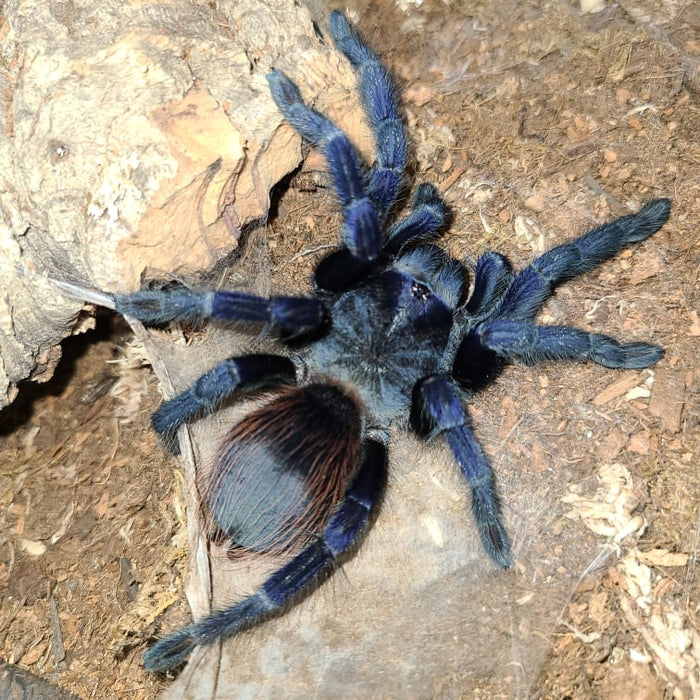
Compact, bold, and underrated, Bumba horrida is a terrestrial New World tarantula from Brazil that stands out thanks to its distinctive red-orange carapace and chill personality. A perfect blend of manageable size, hardy temperament, and unique looks — ideal for collectors who want something “off the beaten path.”
Common Name: Brazilian Red Head
Scientific Name: Bumba horrida
Origin: Brazil
Size: 3.5–4.5 inches (9–11 cm) leg span
Lifespan:
Temperament: Calm to slightly skittish, rarely defensive
Fiery reddish-orange carapace — like a glowing ember
Velvety dark legs and abdomen, sometimes with a faint bluish shimmer
Subtle striping near the knees
Small size, big contrast — really pops in natural light
Enclosure Type: Terrestrial — moderate floor space, good depth for digging
Substrate: 3–4 inches of moist-but-not-wet substrate
Humidity: 65–75%
Temperature: 72–78°F (22–26°C)
Decor:
Will burrow if given the depth — not necessary, but appreciated.
Diet: Crickets, roaches, mealworms
Feeding Schedule:
Reliable feeder — not aggressive but usually takes prey quickly
That red head — unique coloration not seen in many other species
Smaller size = great for compact enclosures
Hardy and low-maintenance
Not aggressive, relatively easy to work with
Rare in the hobby — definitely not your average display spider
Can be shy, but will often sit out if undisturbed
May kick hairs when stressed, though generally mild
Doesn’t like overly dry conditions — keep humidity steady
A bit slower growing than some species, but worth the wait
COMPLETE YOUR DEN
Add practical essentials to your order now — so your new T has what it needs when it arrives.
ISOPODS • CLEAN-UP CREW
A simple clean-up crew for suitable bioactive setups.
VIEW PRODUCT →