


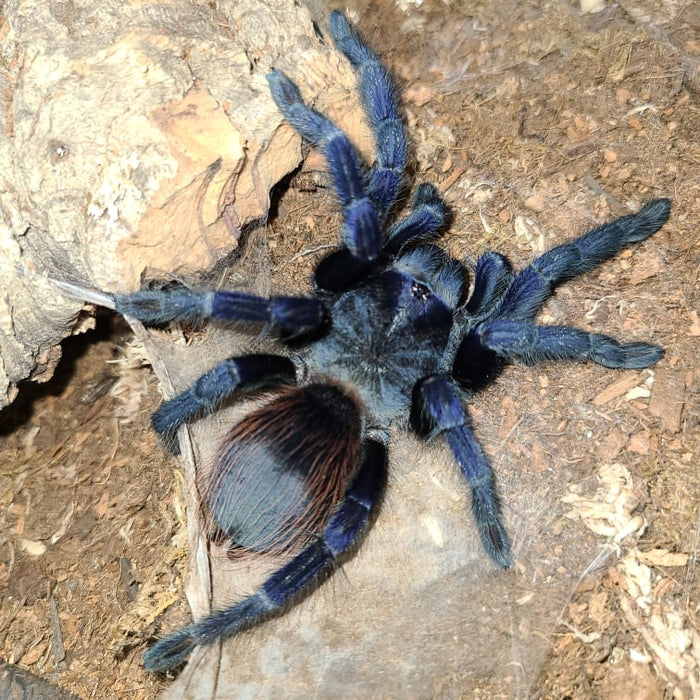

 ISOPODS • CLEAN-UP CREW
Dairy Cows Isopods (Colony of 5)
R 50.00A simple clean-up crew for suitable bioactive setups.
VIEW PRODUCT →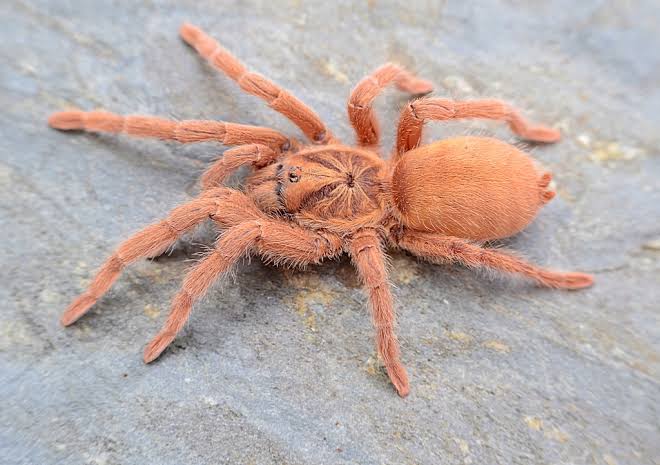
TARANTULA DEN • PREMIUM INVERTEBRATES
● SOLD OUT
Need help choosing a species? Contact us before ordering and we'll help you find the right tarantula.
The Trinidad Olive Gold Form (Neoholothele incei, GCF) is an adorable dwarf tarantula with a lot of personality packed into a tiny, metallic-gold package. Super easy to care for, great webbers, and — bonus — they’re one of the few species that can be kept communally under the right conditions.
Common Name: Trinidad Olive (Gold Color Form)
Scientific Name: Neoholothele incei GCF
Origin: Trinidad and Venezuela
Size: ~3–3.5 inches (7–9 cm) leg span (dwarf species!)
Lifespan:
Temperament: Skittish but not aggressive
Coloration:
A-tier webber — these little guys go wild with tunnels and silk sheets
They will web up every inch of their enclosure if they feel secure
Fascinating to watch, especially in groups!
Enclosure Type: Terrestrial, but semi-arboreal behavior — give vertical elements to web on
Substrate: 2–3 inches of moist but not soggy substrate (coco fiber/topsoil)
Humidity: 70–80%
Temperature: 72–78°F (22–25°C)
Decor:
Communal tip: Only attempt a communal if you:
Diet: Pinhead crickets, fruit flies, small roaches for slings; larger feeders as they grow
Feeding Frequency:
Communals: Feed generously and scatter food
Easy care and low maintenance
Web-heavy and fun to observe
Stay small and are perfect for nano enclosures or displays
One of the only truly communal tarantulas (seriously rare)
The gold color form is just chef's kiss — stunning under light
Fast — they can bolt if spooked, so be cautious with rehousing
Communals are a gamble if not done correctly — cannibalism can still happen
Not great for handling, but excellent for display and observation
COMPLETE YOUR DEN
Add practical essentials to your order now — so your new T has what it needs when it arrives.
ISOPODS • CLEAN-UP CREW
A simple clean-up crew for suitable bioactive setups.
VIEW PRODUCT →